Frequency Oz on Deep Wireless
2011
New Work Notes
New Australian works submitted to Frequency Oz responding to the theme
of “transmission, dislocation, space and place” and how this theme relates
to them as Australians.
Built Environment
Daniel Blinkhorn
“Built Environment” refers to the ever changing urban landscapes that provide settings for human activity, ranging from comprehensive public superstructures to personal and intimate places and spaces.
By situating all manner of kinetic, gestural and textural material within evolving, at times densely populated environments, I hope to provide a short work that harnesses some of the energy and vitality of the built environments in which we live.
Structurally, the works shape and overall trajectory gravitate around concepts discussed in Denis Smalley’s paper “Space form and the acousmatic image” - a framework for investigation of spatial concepts in acousmatic music - (Smalley, 2007). Whilst not necessarily devised as a compositional text per se, I was inspired by the paper’s salient attribution on space form and how it’s embedded within much, if not all acousmatic music (inter alia). To this end, I have used various concepts discussed in Smalley’s paper in a very conscious fashion to govern numerous aspects of the work from a compositional perspective. Some of the more pronounced concepts populating built environment using Smalley’s framework (as indicated in the glossary for the paper) include;
*
•Agential space: ‘space articulated by human (inter)action with objects, surfaces, substances, and built structures, etc’ ‐ Example occurring at time index 0:59 – 1:10
•Gestural space: ‘The intimate or personal, source‐bonded zone, produced by the energy of causal gesture moving through space, as with performer and instrument, or agent and sound‐making apparatus.’ Example occurring at time index 1:39 – 2:02
•Mechanised space: ‘A source‐bonded space produced by sound‐emitting machines, mechanisms and technologically based systems, independently of human activity. Can participate in enacted spaces.’ Example occurring at time index 2:13 – 2:50
•Distal interpolation: ‘A temporary rupture in ongoing proximate space thereby permitting access to a distal view.’ Example occurring at time index 2:02 – 2:12
•Source‐bonded space: ‘The spatial zone and mental image produced by, or inferred from, a sounding source and its cause (if there is one). The space carries with it an image of the activity that produces it.’ Example occurring at time index 0:40 – 0:44
•Vectorial space: ‘The space traversed by the trajectory of a sound, whether beyond or around the listener, or crossing through egocentric space.’ Example occurring at time index 3:08 – 3:35
* Smalley, D. (2007).
In each instance presented, I have included a time indexed reference to the concept as it occurred in the work. This was done with the intention of providing concrete examples of how I chose to position the concepts within the composed spaces themselves.
Due to the nature of Smalley’s framework, the pervasive aesthetic of ‘transmission, dislocation, space and place’ are inherently embedded throughout the work via the concepts articulated by Smalley.
References
Smalley, D. (2007). “Space-form and the acousmatic image,” Organised Sound, 12 (01) 35, 55-56.
-------------------
DePreston - Dedicated to Ambulance Victoria
Automating
I came to Germany as part of my Sound Art studies in Australia (here; 'Neue Music'). I quickly found out that my scrambled crash course in the language was woefully insufficient, also that the course was not nearly as much in English as I had expected. In addition to the problem of basic communication, it became apparent that I was the only student in the institution not fluent in musical notation. So far homesickness hasn't been so much of a problem as the general disconnection from the shared social experience. At Easter, while listening to the radio, I came across a site which had streaming emergency service radio from Melbourne. A taste of home in the most unexpected form! While I was at my home on a sunny Spring day in Hannover, it was the middle of the night on a very long weekend in Melbourne. Overdoses, stabbings, pub fights, all detailed through a series of transmissions by people with one of the hardest jobs in the world, and most importantly in the accent I've taken for granted for the last quarter of a century. Contrast with Deutsche professional and amateur radio from analogue and digital transmissions and perhaps some sense of the culture shock can be felt.
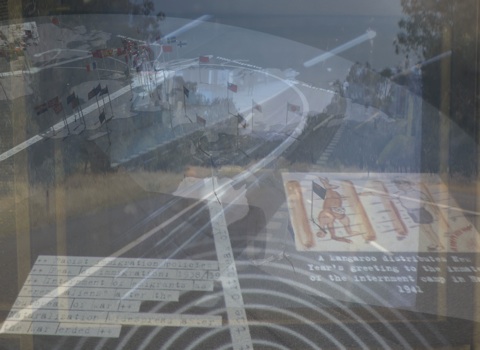
Figure 1: DePreston
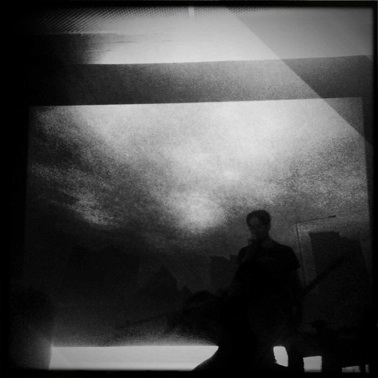
Figure 2: Automating
-------------------
Species of Spaces 0:02 – soundtracks for the city / Melbourne tram conglomerate
Radio Cegeste (a.k.a Sally Ann McIntyre)
In Melbourne during October 2010 on a collaborative residency for live art called Visible City, the keynote project of that year’s Melbourne Fringe Festival, I spent much of my time roaming around on public trams, foraging in record stores and libraries, and recording the sound of the city I was living in, a sustained private psychogeography which served as an investigation of an Audible City, which, via its various outcomes in small public art projects, was my response to the residency’s daily challenges.
Despite growing up three hours east of Melbourne, the concentrated attentive focus on the city, which the residency allowed was the first time I had got to grips with the place through its sonic details for some time. The sonic textures of the inner city’s life, poised as it was between a historically unprecedented draw in the local football league’s final match and the re-play outcome the week after, something that had left the city on some level of standstill, like a held breath within the weave of its tribalisms and rivalries, seemed richly interpolated with mythologies, accents, the tension between older ways of life and newer, globalised mall culture.
My public art works during the Visible City residency included creating Mini FM stations for localised situations and spaces in response to my wandering research, such as narrowcasting a series of field recordings collected on inner city public transport back into the tram system via distributed radios, installing a dawn chorus of radiophonic native Australian birdsong in an inner city arcade in the week of the 70th anniversary of Walter Benjamin’s death, and the project ‘soundtracks for the city’, a live radio show and film soundtrack which involved sitting on a chair in a public space (in this case the corner of Elizabeth and Little Collins Streets in the Melbourne CBD, and within the former Greville Botanical Gardens, now Grattan Gardens) with a portable record player and a stack of library records thrown away from the channel 10 TV archives (with such titles as “Stranger in the City : Alienation”), over-dramatically responding to an imagined narrative crafted from the movements of passers by for a two hour period, with appropriate feedback from the city’s population of viewer/listeners (this work was not a one-to-many, but many-to-one transmission).
This piece for Deep Wireless Toronto is a re-situating of some of the audible elements of this series of works, within a new transmission work for Mini FM recorded in Dunedin, New Zealand in April 2011. As a memory space, Melbourne appears here as fleeting and fractured, its narratives disconnected, fragmented and subtle at turns. In such a bewilderingly rich environment of signs, one gets the impression that the smallest spheres of holding are the only ones really trustworthy: either the cloistered private spaces of the headphone-listening space, where people build private rooms in public space via the delineation of their own sound-worlds, or that of intimate spaces of private conversation, whether it be between two strangers on a tram of different nationalities and generations, or an old regular being welcomed into an Italian café that has been in the same site for four generations. Here, on the level of city life, grand narratives of romantic nationalism seem as pompous, outdated and misrepresentative as public sculpture which tries to speak “for” a population so diverse and decentred. People sing their own songs on the trams of Melbourne, in exchange for a dollar or two.
The medium of radio, with its potential to site sound in small bounded transmission spaces (in the case of Mini-FM) and in the immaterial materiality of the ether, is an apt exploratory tool when thinking about sound recording, memory and place. This experimental documentary eschews a centralized narrator in favour of letting the city ‘speak for itself’, reflecting and re-posing the shifting, ephemeral fabric of the city’s sounds, where we listen in daily to many such fragmented narratives and imperfect attention-spaces, quiet whispers and clamours to be heard. The specificities of the spaces in which this work’s original recordings move, layered together in a field of interference, imperfect recall and re-transmitted siting within the present, become analogue for my own dislocation from Australia as an emigrant whose cultural identity is informed by spending half my life living in, and identifying with the cultures of, New Zealand. For me, asking the question(s) ‘what is it to be Australian’ from such an observational, yet immersed perspective seems the gateway to a potent set of trajectories.
-------------------
Present in the Landscape
Garth Paine
All landscapes are contested spaces, they are constructions of enculturation, be that perceptions of the energy and spirits within the land, and reflected by the land and the animals inhabiting it, or a Western consumer view of the potential of wealth production, the litres of oil, tons of ore, gold etc.
Present in the Landscape is an exploration of the Shoalhaven River (S34 53.686 E150 30.157) in southern New South Wales, Australia. This work came about during a residency at the Bundanon trust (http://www.bundanon.com.au/) property, Bundanon, which was donated to the nation by the famous Australian painter Arthur Boyd in order to be a place of retreat and vitality for the Australian arts.
Present in the Landscape specifically addresses the existence of a river, which runs across floodplains, and has had a dynamic and active life, changing direction, remapping its own presence in the landscape over centuries, as large weather events have occurred. However, a decade ago the large Tallowa dam was constructed upstream from the Bundanon property with the intention of providing drinking water to the communities on the south coast of New South Wales. This construction substantially changed the life of the river, the migration of the perch fish from river breeding out to see on an annual basis, and transformation of the reeds and grasses growing in/along the river, the destruction of the mangroves and a transformation of the salt content of the water itself which has been reflected in changing fish stocks.
In order to explore some of these issues, I spent a day on the river in a boat, stopping to talk with people about their use of the river and why they were there, either in a boat or on the side of the river, swimming and walking, picnicking etc. These recordings formed a snapshot of the white man's use and perspectives on the river are juxtaposed in this work by interviews with local aboriginal men about the lore of the land and the importance of both water and the river in that natural lore. The aboriginal lore reflects on changes of season, of the circle or cycles of life or energy, harmony and counterpoint within the land itself and our presence on and within it. A third character in this work is the natural environment itself, represented here through many early morning ambisonic recordings of the dawn chorus, of the afternoon and into evening changes of birdlife, insects and fish jumping, representing the temporal flow and dynamism of the landscape itself.
In the centre, between these three critical players is an interstitial space, an energy space that represents the interplay of sharing the commonality, conflict and the transformation that occurs as these three elements dynamically dance around each other over time.
This work was originally composed for a six channel surround sound performance in the original sandstone Bundanon homestead in which Arthur Boyd lived. This stereo remix therefore represents the original work however doesn't contain the same sense of immersion in the material properties of the sound and the interplay between that characters outlined above. The work was originally composed in September 2010.
-------------------
Elements of transmission, location, space and place in the time-lapse audio works of Sam Gillies’ “Dichotomy:Assembly”
Sam Gillies
Introduction
“Dichotomy:Assembly”, by Sam Gillies, is a piece that explores the nature of the duality of the soundscape of Perth, Western Australia. It is one in a series of the artist’s pieces that utilises a time-lapse approach to field recordings to inform an alternative way of aurally interpreting the soundscape of suburban Perth which, unlike the site specific nature of a traditional field recording, divorces the site from a traditional view of time and moves the perception of location to be appreciated as a series of generalised samples of occurrences that contribute to form a different kind of impression of a given space.
Creation of a recording
Gillies’ recording technique mirrors that of time-lapse video wherein that frames of audio (24 frames per second) are captured by the artist using custom made software in the program max/MSP. In much the same way that a time-lapse video shows the viewer sequential frames of time that occurred in reality some distance apart, so too does the audio captured in a similar way. This means that while the general impression of frequency content is present, only portions of specific events (a insect noises, a car passing) are captured. The result is a granularised audio file that retains some key elements of the original but lacks any recordings of a whole sonic event.
Location and Space
The field recording for “Dichotomy:Assembly” was recorded in a suburban street over a period of an hour, 7-8pm. The street pulls into play several elements of the Perth soundscape. On one hand, nature abounds. During the recording the wind was rustling through the trees and insects were chirping away contently. On the other hand, the sounds of modern suburbia are never too far away. The soft sounds of distant roads and the freeway rumble ominously in the distance while the recording was punctuated by the louder sounds of passing cars and wandering residents. Thus, the suburban street is the perfect sonic meeting point of the soundscape of Perth, the elements of nature that as a city Perth often prides itself on retaining and at the fringes the ever-present encroachment of industry.
Transmission and Place
While the site itself perfectly reflects a sonic metaphor of the underlying nature of key elements of Perth’s location and space, the use of a time-lapse method of recording this site allows for a more easily accessible transmission of this idea to the listener and a more reflective attitude towards this sense of place the field recording generates. The time-lapse method opens the listener up to listening to the site in the context of its generalities. The technique frees the listener from specific instances of sound and transforms sound into a more general blur of activity over time. The recording is a series of data points, taken at regular points in time, sampling the environment. It destroys a traditional sense of continuity that exists with field recordings and instead creates its own sense of expectancy; individual sounds are lost but the general impression of the soundscape remains. The initially disparate elements of man and nature are folded into one, as cricket chirps become a blur of high frequencies and passing cars become similarly blurred bursts of sound.
As such, “Dichotomy:Assembly” opens up the duality of Perth’s urban soundscape to a new way of constructing a reflective appreciation of the sense of place that the Perth soundscape provides. In doing so, through the use of a time-lapse process of recording over a conventional technique of field recording, “Dichotomy:Assembly” effectively blurs the distinction between the two elements of nature and industry in the Perth soundscape.
-------------------
Overheard, By the Way
An exploration of transmission and receiving systems
Pamela Lee Brenner and Johannes Muljana
An audio and sculptural installation using radio receivers, also commonly referred to as “boom boxes”. We have chosen to use commercially available micro transmitters to be able to teeter on the threshold of transmission with a mixed result. Sometimes we can hear our transmission, sometimes it disappears behind the more powerful ones, creating an interesting balance and in the process highlighting the nature of transmission over the air as being one dominated by large commercial interests and heavily regulated by the governing powers.
This work functions as an installation which is made up of many small components. These components are a mixture of pre-loved, unwanted and new radio receivers, as well as radio cassettes, of all shapes and sizes. They were arranged in a certain way and tuned to certain frequencies and they receive sounds that are broadcast locally. The distributed and modular nature of the work allows it to be extremely context and location sensitive, which allows for many different incarnations in the future.
The sounds used in this project contains “borrowed” elements of local sounds which include the sounds of conversations, street noises, traffic sounds, celebrations and so on. These sounds have been recorded, reconfigured and processed as soundscapes representing a composite sound of a local community as well as historical and recent speeches mixed randomly to create a new sound. There are 3 compositions of sound which are overlaid on transmission creating a unique audio experience relating to ones position in space. This reflects the virtual space of the sound origins and the dislocation of transposing the sounds from their original places and contexts metaphorically represents our virtual connection here in Australia with the rest of the world, where our physical distance is transmuted by media.
When the work is installed in a physical space, overlaid on the recorded and broadcast transmissions is a live direct transmission of the audience in the location of the installation. For the performance of the sound work via broadcast or podcast radio transmission only a composite snapshot of the source compositions overlaid is provided to simulate the live “mix”.
The use of radios and the composition of the transmissions inherently have a sense of dislocation, space and place.
Images
The following images show the work in three different installation contexts. The first was in NG Gallery in Chippendale, NSW, the other ones were installations at Studio 10 at Fraser Studios in Chippendale.

Figure 3: Backtalk Radio Installation at NG Gallery in Chippendale, 2009
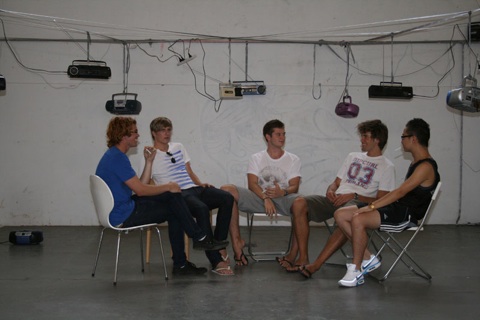
Figure 4: Smoko Installation at Studio 10 in Fraser Studios, Chippendale, 2009
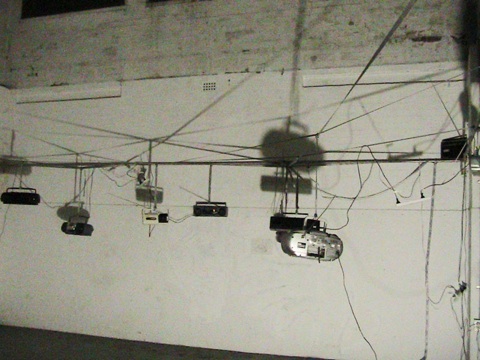
Figure 5: Transmitted Shadows Installation at Studio 10, Fraser Studios, Chippendale, 2009
-------------------
I'm Really Conscious of Myself Talking Here
Jordan Lacey
Fragments of voice samples from three locations are included in this work. Two urban intellectuals self-consciously discussing ‘self’ in a dark garage. An opal miner from outback NSW talking free form about his fellow miners. A football crowd bemoaning a poor kick from their beloved team. The peculiarity of sound recording is its ability to break down space-time and bring together in one place a community of speakers who would never normally come together. Questions arise from this schizophonic conglomeration of who, and what gestures are encouraging the responses from this triad of sound fellows. Space and place. Space is everywhere but place is space that we appropriate for our lifetime and imbue with the essence of our words, and our gestures. Traveling across Australia generates a sense of vastness of space – empty space of the deserts, condensed space of the cities. To stop and listen, to capture passing voices with a microphone is to capture the essence of a place, the essence that will shape that space forever. To take this aural fragment and mix it with the fragments of others from vastly distant places is an act of dislocation. To dislocate from the source of place, but to capture the texture, the anxiety, the passion, the bemusement of the body that made the utterance while wrapped in its place. Voices find themselves in new places – wherever loudspeakers will release them – to shape the space of new places, the places of listeners. The old world is dying in Australia – the old world of hardened people who growled out their words and uttered strange wisdoms born from the experience of inhabiting space to which they never belonged; bodies dislocated from other sides of the world. But the other side of the world means little now as space becomes homogenised, what a listener experiences in an English town may soon differ little from what a listener experiences in an Australian town. The sounds of machinery drowning out residual accents and the quotidian indoor life replacing the voice of outdoor play. To capture the voice of the old, who are sedentary and whose voices are shaped by their place, before they disappear into the ancestor-forgotten future. To be replaced by anxious intellectuals who do not know their place, or what space they may find that is different, who are dislocated from there own bodies as the vocabulary of difference is deconstructed. What of the howling football crowds, once ritualistic outbursts from the working class, now a hollow echo in the corporatised spectacle of sport, as is any sport beamed into homes everywhere. Capture the essence and transmit its hidden clues and concealed references to a homogenized future, so that boiling humanity may bellow forth for a new space, a new place, free from the homogeneous spread.
-------------------